
• A no-fluff, real-world USMLE Step 1 study guide created by a med student who passed. Learn how to structure your prep, master UWorld, and crush the NBMEs.


    Feeling Lost with Step 1? I’ve Been There

    Let me guess—you’ve downloaded First Aid, opened UWorld, maybe watched a few Bootcamp videos… and you’re already overwhelmed. You’re not alone.

    When I started studying for the USMLE Step 1, I had no idea what I was doing. The internet was flooded with opinions, expensive prep courses, and advice that didn’t apply to someone like me—a regular med student just trying to pass, not get a 270.


    What’s Inside the Blueprint?

    This isn’t just a resource list. It’s a full, step-by-step system designed around how real students actually study and succeed. Here’s what I break down inside:

    📚 Phase I: Content Review

    Start with high-yield video resources like Bootcamp, B&B, Sketchy, and Pathoma—but don’t get stuck here. I explain how long to stay in this phase depending on your background, and how to avoid wasting time trying to “complete” everything.

    ❓ Phase II: Active Learning

    The core of your prep. UWorld strategy, how to learn from mistakes, when to switch to a second pass, and how to use Anki + AMBOSS to lock in high-yield concepts.

    🧪 Phase III: NBME Prep

    When you should take your first NBME, how to analyze it, and how to pace the remaining exams. I even walk through a weekly plan for your final month—Free 120 included.


    A Few Key Takeaways

    • You don’t need to pay $3,000+ for USMLE prep. Most of the best tools are $300 or less.
    • Doing UWorld right > Watching more videos.
    • NBMEs are sacred—review them thoroughly.
    • Anki is not optional. Use it the right way and your recall will skyrocket.
    • Rest matters. I included how I scheduled weekly breaks to avoid burnout.

    Who This Is For

    This guide is for you if:

    • You’re just starting out and don’t know what to prioritize
    • You’re already doing questions but feel like you’re not improving
    • You’re scoring 50–60% on NBMEs and don’t know what’s next
    • You want a study plan that’s realistic, actionable, and effective

    Whether you’re starting from scratch or reviewing weak areas, this blueprint will save you time, stress, and confusion.


    Download the Guide

    Ready to stop second-guessing and start making real progress?

    👉 Click here to download The Ultimate USMLE Step 1 Blueprint

    It’s the exact guide I used to pass—and I wrote it with one goal in mind: to help you do the same.

    You got this.
    – Brandon
  • Oxygen. The eighth element on the periodic table. The molecule that makes our planet unique. The one that powers life, fuels metabolism, and shapes evolution.

    We all know what oxygen is — but have you ever asked yourself why we need it? What does it actually do once it’s inside our bodies?

    In this short article, we’ll follow oxygen’s journey from the moment you breathe it in to the moment you exhale it back into the atmosphere.

    The Journey Begins: Breathing In

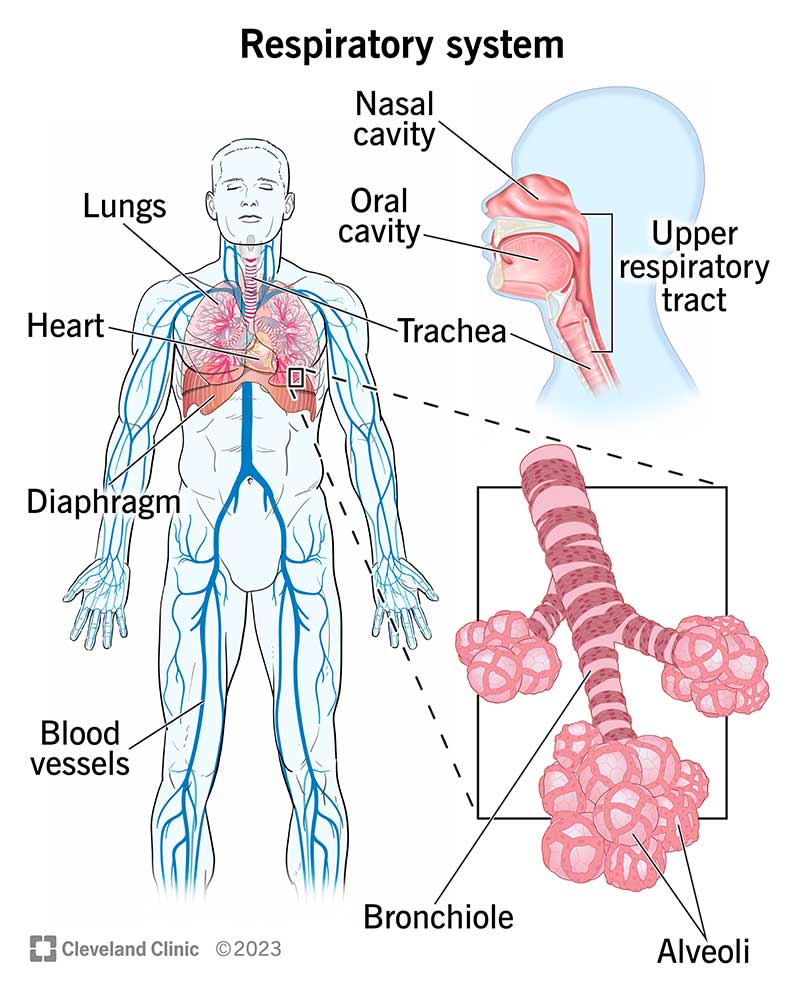
    It all starts with a breath — and the diaphragm, a dome-shaped muscle beneath your ribcage.

    When the diaphragm contracts, it pulls downward, creating negative pressure inside your chest cavity. It’s like sipping through a straw: pressure drops, and air rushes in.

    The air from the atmosphere is never sterile, it might have pollen, spores, dirt, and micro-particles too small to be seen. So your nose has tiny hairs which act as air filters, to trap as much of these particles as possible.

    After filtering, the air is gently warmed. This happens thanks to the choanae, two funnel-shaped openings at the back of your nasal cavity. They’re rich in blood vessels, which work like a built-in heating system — warming the air before it reaches your lungs, making it less irritating to delicate tissues.

    From there, the warmed air passes through your trachea (windpipe), which splits into bronchi and then branches out like a tree into smaller and smaller tubes called bronchioles. At the very tips of these tiny branches are microscopic air sacs called alveoli — the final stop for oxygen in your lungs.

    Image source: Cleveland Clinic https://my.clevelandclinic.org/health/body/21205-respiratory-system

    Gas Exchange: Oxygen Enters the Bloodstream

    At the end of the airways, oxygen reaches the alveoli — tiny, balloon-like air sacs surrounded by a dense network of capillaries. Both the alveolar wall and the capillary wall are incredibly thin, just one cell layer thick, making it easy for gases like oxygen to move across.

    Think of it like this: imagine walking through a paper-thin glass wall that somehow stays intact behind you. That’s how easily oxygen diffuses from the air inside the alveoli into the blood flowing through the capillaries.

    Once inside the bloodstream, a small fraction of oxygen dissolves directly in the plasma, but most of it is quickly picked up by your red blood cells which are responsible for transporting oxygen to nearly every cell inside your body.

    Circulation: Oxygen Gets Delivered

    Now our red blood cell — carrying its precious oxygen cargo — needs to travel through the body to deliver it where it’s needed. But how does it make the journey?

    That’s where the heart comes in. Acting as a muscular pump, the heart squeezes with enough force to push blood through the entire circulatory system, a network of vessels stretching over 60,000 miles. With each beat, it generates enough pressure to circulate about 5 liters of blood throughout the body every minute — ensuring oxygen reaches tissues from your brain to your toes.

    Cellular Respiration: The Final Destination

    When the red blood cell reaches its destination — a tissue in need of energy — oxygen diffuses out of the blood and into the cell. There, it enters the mitochondria, the tiny power plants inside nearly every cell.

    If you remember high school biology, you might recall the phrase: “The mitochondria is the powerhouse of the cell.” That’s because it’s responsible for producing ATP (adenosine triphosphate) — the molecule your body uses for energy.

    Oxygen plays a critical role in the final step of this energy-making process, known as the electron transport chain. Without oxygen, the chain stops — and ATP production grinds to a halt.

    That’s the ultimate purpose of oxygen: not just to be present, but to enable your cells to extract energy from the food you eat. Without oxygen, there is no energy. Without energy, there is no life.

    In this way, oxygen is life — not because we breathe it, but because we use it.

    Conclusion: The Invisible Engine Behind Life

    From the air you breathe to the energy your cells produce, oxygen powers every moment of your life. It travels a remarkable path — through your lungs, into your blood, carried by red blood cells, and finally delivered to the mitochondria that keep your body running.

    Though we rarely think about it, this invisible process is happening every second, without effort or awareness. And yet, it’s the foundation of everything — from thinking and moving to healing and surviving.

    Next time you take a breath, remember: you’re not just filling your lungs — you’re fueling your entire body, one molecule at a time.

  • If you’re a fitness junkie or in healthcare you’ve probably heard the term countless times before. But what does it really mean – and why is it so important?

    Cardiac output is the volume of blood your heart pumps out per minute. It is a direct reflection of how hard and how efficiently your heart is working.

    Cardiac Output = Heart Rate x Stroke Volume

    Heart Rate: beats per minute (bpm)
    Stroke Volume: The amount of blood ejected in each beat.

    Think about it, cardiac output is simply how much blood your heart pumps out in a minute. For example, if your heart beats at 60bpm and it ejects 70ml in each beat (stroke volume). Then your cardiac output can be calculated the following way:

    Cardiac Output = 70bpm x 70ml = 4,900ml/min or simply 4.9L/min.

    In this example the heart is pumping out 4.9L every minute so in this example the Cardiac Output is 4.9L/min.

    Ok, so what does this mean?

    This is where it gets interesting.

    Your cardiac output directly depends on the body’s demands. When your body’s energetic requirement increases for example, when you climb a long set of stairs, your heart rate increases raising the cardiac output to meet the body’s demand.

    If the heart rate were not to increase accordingly, not enough oxygen in the blood would get to the brain on time and you would instantly start getting dizzy and might even pass out from the lack of oxygen (hypoxia) to the brain.

    So now you’re starting to understand why cardiac output is so important!

    The heart must be perfectly in sync with the body’s demands in order for you to be able to function correctly at all times (talk about a hard job).

    This is where heart disease comes in, anything that disrupts the heart from meetings the body’s demands will lead to concerning symptoms like fatigue, shortness of breath etc. but that is a topic for another day.

    At rest the average adult has a cardiac output between 4-6L/min. But during intense exercise, it can increase up to 20L/min and up to 35L/min in elite athletes. This is achieved by:

    • Increasing heart rate up to 160-180 bpm
    • Increasing stroke volume up to 100-120ml per beat.

    Why cardiac output is so important in physiology and training?

    Cardiac output is central to:

    • VO₂ max (oxygen delivery is CO × a‑vO₂ difference)
    • Blood pressure (CO × total peripheral resistance)
    • Recovery tracking (abnormal CO during exercise = red flag)

    Your heart isn’t just beating — it’s calculating and adapting every second to meet your needs

    TL;DR: The Takeaway

    • Cardiac output = heart rate × stroke volume
    • It tells us how well your heart delivers blood and oxygen
    • It rises with exercise, falls in heart disease
    • It’s the cornerstone of cardiovascular performance.

    Reference:

    Costanzo, Linda S., “Costanzo Physiology, 7th Edition” (2022).

  • As physicians, we often emphasize the importance of routine labs and vital signs to assess cardiovascular health—but one of the most predictive and underutilized measures of long-term health risk is cardiorespiratory fitness, commonly quantified by VO₂ max.

    VO₂ max, or maximal oxygen consumption, represents the maximum capacity of an individual’s body to take in, transport, and utilize oxygen during strenuous exercise. It’s not just a number for athletes—it’s a clinically meaningful predictor of morbidity and mortality.


    What Is Cardiorespiratory Fitness?

    Cardiorespiratory fitness—also called maximal aerobic power or cardiovascular fitness—is the combined functional capacity of the heart, lungs, and muscles to sustain prolonged, high-intensity physical activity.

    The World Health Organization has long recognized VO₂ max as the single best indicator of cardiorespiratory fitness.

    • low VO₂ max is strongly associated with:
      • Premature death
      • Increased risk of chronic diseases such as type 2 diabetes, hypertension, and heart disease
    • high VO₂ max offers protection against:
      • All-cause mortality
      • Cardiovascular disease, particularly coronary artery disease

    How Is VO₂ Max Measured?

    1. Direct Measurement

    The most accurate way to determine VO₂ max is through direct testing using a graded treadmill protocol and metabolic gas analysis.

    How it works:

    • The individual runs or walks at progressively increasing speed and incline.
    • Throughout the test, expired air is collected and analyzed for:
      • Pulmonary ventilation
      • Inspired oxygen (O₂)
      • Expired carbon dioxide (CO₂)
    • This allows for a breath-by-breath calculation of oxygen uptake.

    The Bruce Protocol is one of the most widely used direct VO₂ max treadmill protocols in clinical and research settings.

    While accurate, this method requires access to specialized equipment and trained personnel—making it less feasible for routine use in many settings.


    2. Indirect (Field-Based) Estimation

    When direct testing is not feasible, indirect methods offer reasonable estimates of VO₂ max. These are based on physical performance data—typically heart rate, distance covered, and/or time.

    Common field tests include:

     Queen’s College Step Test (QCT)

    • Uses a 16.25-inch step and a metronome-guided pace:
      • 24 steps/min for males
      • 22 steps/min for females
    • After 3 minutes, pulse is measured from 5–20 seconds into recovery.
    • Pulse rate is converted to beats per minute and plugged into the following formulas:

    Men: VO₂ max = 111.33 – (0.42 × heart rate in bpm)
    Women: VO₂ max = 65.81 – (0.1847 × heart rate in bpm)

     1.5 Mile Run Test

    • The participant completes 1.5 miles as quickly as possible.
    • VO₂ max is calculated based on body weight, sex, and run time using:

    VO₂ max (ml/kg/min) =
    88.02 + (3.716 × gender) – (0.0753 × weight in lbs) – (2.767 × time in minutes)
    (gender = 1 for males, 0 for females)

    Other Common Indirect Tests

    • 20-meter Shuttle Run Test (Beep Test)
    • 6-Minute Walk Test (6MWT)

    These are especially useful in clinicalrehabilitation, or community settings where equipment and staffing are limited.


    Clinical Relevance of VO₂ Max

    Incorporating VO₂ max estimation into health assessments offers a deeper view of a patient’s functional capacity—beyond resting vitals or lipid panels.

    Low aerobic capacity is associated with:

    • Increased systemic inflammation
    • Insulin resistance
    • Higher risk of heart failure and cognitive decline

    Given its predictive value, VO₂ max should be considered in:

    • Risk stratification for cardiovascular disease
    • Exercise prescription and cardiac rehab
    • Health promotion and lifestyle counseling

    Wearables and VO₂ Max: Where Technology Fits In

    In recent years, wearable devices like Garmin and the Apple Watch have incorporated algorithms that estimate VO₂max based on heart rate, pace, and user profile data. These estimations typically occur during steady-state runs or walks and use trends in heart rate variability, speed, and recovery time to make predictions.

    While these values are not as precise as those obtained via direct gas analysis, they provide a reasonable approximation of aerobic capacity—especially for tracking changes over time within the same individual.

    In clinical or athletic settings where formal testing isn’t feasible, these tools can be valuable for monitoring trends, guiding training, or flagging declines in cardiovascular fitness that may warrant further evaluation.


    Key Takeaways

    • VO₂ max is the best single indicator of cardiovascular and respiratory fitness.
    • higher VO₂ max correlates with lower risk of chronic disease and early death.
    • It can be measured directly via treadmill + gas analysis, or indirectly through field-based tests like the Queen’s College Step Test or 1.5 Mile Run.
    • These simple estimation tools can be implemented in clinical or fitness settings to screen for poor fitness and monitor progress over time.

    Reference

    Saboo N, Buttar KK, Kacker S. A review: Maximal oxygen uptake (VO₂ max) and its estimation methods. Department of Physiology, RUHS College of Medical Sciences, Jaipur, Rajasthan, India.

    This article is for educational purposes only and is not a substitute for professional medical advice.

  • As a physician, I’m often asked about VO₂ max—especially by patients interested in optimizing athletic performance or tracking long-term health.

    The short answer: VO₂ max is one of the most powerful indicators we have of cardiovascular fitness and overall physiological resilience. It’s not just a number for elite athletes; it’s deeply relevant to your risk of disease and even mortality.

    Let’s break down what VO₂ max actually measures, why it matters, and how you can influence it through training and physiology.


    What Is VO₂ Max?

    VO₂ max refers to the maximum amount of oxygen your body can utilize during intense exercise. It’s typically measured in milliliters of oxygen per kilogram of body weight per minute (ml/kg/min).

    This number reflects the integrated performance of your heart, lungs, blood vessels, and muscles. It essentially tells us how efficiently your body can deliver oxygen to tissues and how effectively those tissues use it.

    • In athletes, VO₂ max is a predictor of endurance performance.
    • In the general population, it strongly correlates with all-cause mortality, particularly cardiovascular death.

    The Genetic Component

    Like many physiological traits, VO₂ max is partially heritable.

    A well-known case is Eero Mäntyranta, a Finnish Olympic skier. He carried a mutation in the erythropoietin (EPO) receptor, which led to elevated red blood cell production, increased total body hemoglobin, and an exceptionally high VO₂ max. Combined with training, this gave him a significant physiological advantage.

    While most of us don’t have such a mutation, it illustrates the interaction between genetics and training. Your baseline potential is inherited—but how close you get to it is largely up to your behavior and environment.


    How Does Training Influence VO₂ Max?

    Exercise—particularly structured endurance training—can increase VO₂ max by modifying two key components:

    Oxygen Delivery (Central Adaptations)

    These involve improvements in the heart and circulatory system:

    • Increased stroke volume and cardiac output (Qmax)
    • Expanded plasma volume
    • Elevated hemoglobin concentration
    • Enhanced left ventricular function and compliance

    Oxygen Extraction (Peripheral Adaptations)

    These occur at the level of skeletal muscle:

    • More capillaries per muscle fiber
    • Increased mitochondrial density
    • Improved oxidative enzyme function

    Together, these adaptations enhance both how much oxygen your body delivers and how effectively your muscles use it.


    Central vs. Peripheral: A Longstanding Debate

    In the 1960s, Ekblom and Saltin were among the first to study whether endurance training improves VO₂ max through central (cardiac) or peripheral (muscular) adaptations.

    Their conclusion? Both matter. But central changes—like increased cardiac output—tend to drive the early gains in VO₂ max during training (first 8–12 weeks), while peripheral adaptations develop more gradually with sustained training.

    Modern studies and meta-analyses continue to explore this distinction:

    • Qmax (cardiac output) shows a linear relationship with VO₂ max.
    • a-vO₂ difference (oxygen extraction) improves significantly with ≥12 weeks of structured endurance training.
    • Blood donation studies show that a loss of red cell mass (even one unit) can reduce VO₂ max by up to 8%, underscoring the importance of blood volume and hemoglobin in oxygen delivery.

    Molecular and Hormonal Regulation

    Endurance training also triggers molecular pathways involved in oxygen regulation:

    • Hypoxia-inducible factor-2α (HIF-2α) and EPO are transiently upregulated in skeletal muscle after intense exercise.
    • However, studies suggest that plasma volume expansion alone doesn’t stimulate EPO unless red blood cell volume is also low.
    • Over time, increased RBC mass and hemoglobin content are key contributors to improved oxygen transport and VO₂ max.

    Evidence-Based Training Strategies to Increase VO₂ Max

    Research supports several strategies for improving VO₂ max through training:

    1. High-Intensity Interval Training (HIIT)

    Protocols like 15 seconds maximal running followed by 15 seconds rest (repeated to total 15 minutes), performed 3 times per week for 2 months, have shown uniform increases in VO₂ max across all subjects.

    2. Combined Intervals and Continuous Running

    In the classic study by Hickson et al. (1977):

    • Subjects alternated between:
      • 5×5 min intervals at VO₂ max pace
      • 30–40 minutes of fast continuous running
    • Over 10 weeks, every participant saw a minimum increase of 700 mL O₂/min.

    3. Consistency and Progressive Overload

    The most effective programs are:

    • At least 12 weeks in duration
    • Designed to progressively challenge both central and peripheral systems
    • Tailored to elicit maximum individual adaptation

    Clinical Relevance Beyond Athletics

    Even outside of competitive sports, VO₂ max remains a clinical biomarker of longevity. Studies link low VO₂ max to:

    • Higher risk of cardiovascular disease
    • Increased all-cause mortality
    • Poorer outcomes in chronic conditions like heart failure and COPD

    For this reason, VO₂ max estimation (via treadmill testing or wearables) is increasingly used in preventive cardiology and health risk stratification.


    Final Thoughts from a Medical Perspective

    VO₂ max is more than just a performance number—it’s a window into your cardiovascular health.

    • If you’re an athlete: VO₂ max can help guide training and recovery.
    • If you’re a patient: it offers insight into your physiological reserve and long-term health outlook.
    • If you’re a researcher or clinician: understanding how genetics, training, and environment shape VO₂ max is key to personalizing interventions.

    While we can’t control our genetics, we can absolutely influence how well our cardiovascular system performs through smart, evidence-based training.

    References
    Lundby C, Montero D, Joyner MJ. Biology of VO₂max: looking under the physiology lamp. Acta Physiol (Oxf). 2017;220(2):218-228. doi:10.1111/apha.12827

    This article is for educational purposes only and is not a substitute for professional medical advice.