Oxygen. The eighth element on the periodic table. The molecule that makes our planet unique. The one that powers life, fuels metabolism, and shapes evolution.
We all know what oxygen is — but have you ever asked yourself why we need it? What does it actually do once it’s inside our bodies?
In this short article, we’ll follow oxygen’s journey from the moment you breathe it in to the moment you exhale it back into the atmosphere.
The Journey Begins: Breathing In
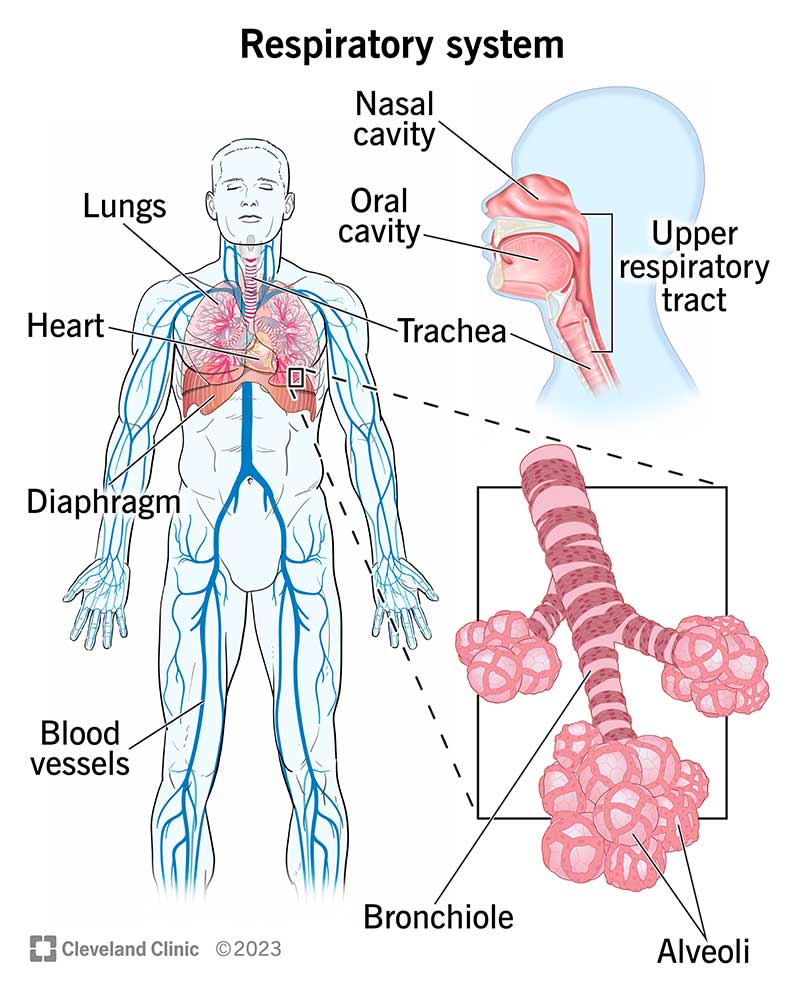
It all starts with a breath — and the diaphragm, a dome-shaped muscle beneath your ribcage.
When the diaphragm contracts, it pulls downward, creating negative pressure inside your chest cavity. It’s like sipping through a straw: pressure drops, and air rushes in.
The air from the atmosphere is never sterile, it might have pollen, spores, dirt, and micro-particles too small to be seen. So your nose has tiny hairs which act as air filters, to trap as much of these particles as possible.
After filtering, the air is gently warmed. This happens thanks to the choanae, two funnel-shaped openings at the back of your nasal cavity. They’re rich in blood vessels, which work like a built-in heating system — warming the air before it reaches your lungs, making it less irritating to delicate tissues.
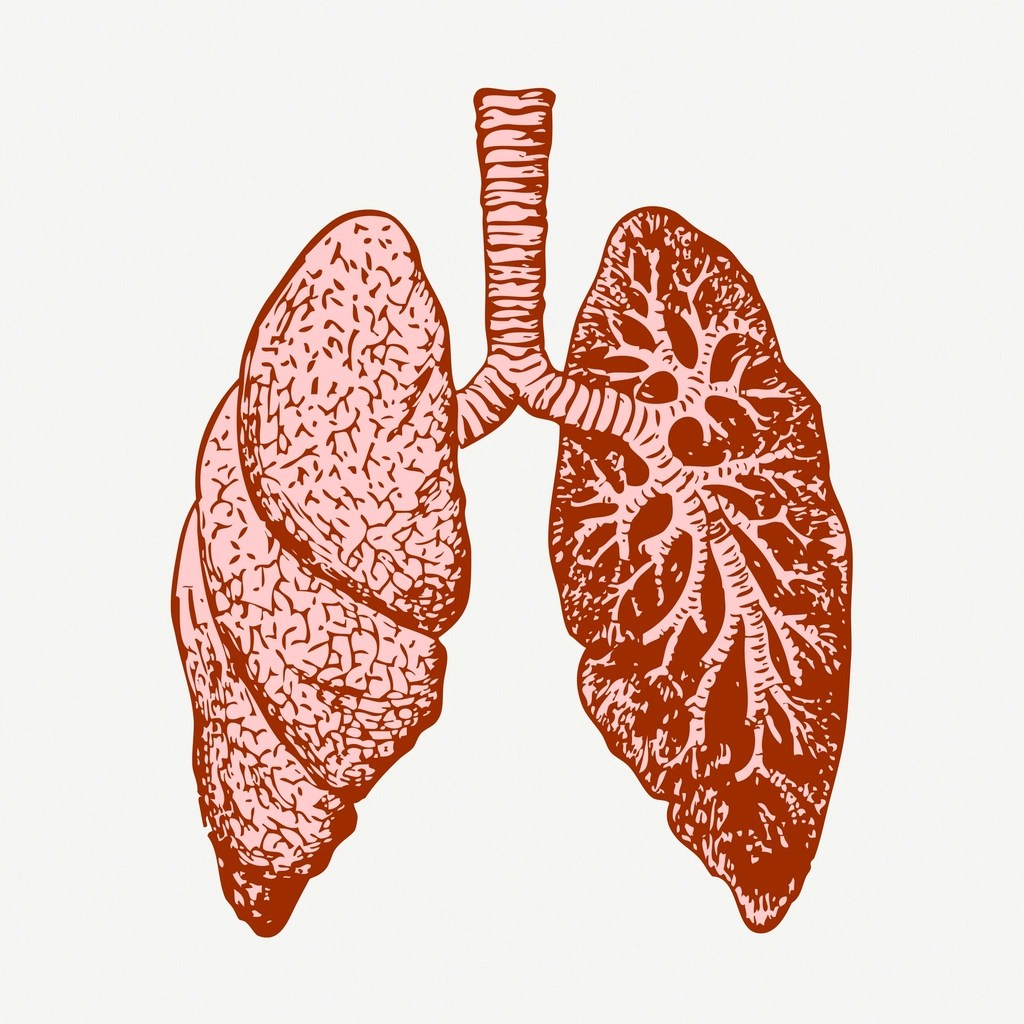
From there, the warmed air passes through your trachea (windpipe), which splits into bronchi and then branches out like a tree into smaller and smaller tubes called bronchioles. At the very tips of these tiny branches are microscopic air sacs called alveoli — the final stop for oxygen in your lungs.
Gas Exchange: Oxygen Enters the Bloodstream
At the end of the airways, oxygen reaches the alveoli — tiny, balloon-like air sacs surrounded by a dense network of capillaries. Both the alveolar wall and the capillary wall are incredibly thin, just one cell layer thick, making it easy for gases like oxygen to move across.
Think of it like this: imagine walking through a paper-thin glass wall that somehow stays intact behind you. That’s how easily oxygen diffuses from the air inside the alveoli into the blood flowing through the capillaries.
Once inside the bloodstream, a small fraction of oxygen dissolves directly in the plasma, but most of it is quickly picked up by your red blood cells which are responsible for transporting oxygen to nearly every cell inside your body.
Circulation: Oxygen Gets Delivered
Now our red blood cell — carrying its precious oxygen cargo — needs to travel through the body to deliver it where it’s needed. But how does it make the journey?
That’s where the heart comes in. Acting as a muscular pump, the heart squeezes with enough force to push blood through the entire circulatory system, a network of vessels stretching over 60,000 miles. With each beat, it generates enough pressure to circulate about 5 liters of blood throughout the body every minute — ensuring oxygen reaches tissues from your brain to your toes.
Cellular Respiration: The Final Destination
When the red blood cell reaches its destination — a tissue in need of energy — oxygen diffuses out of the blood and into the cell. There, it enters the mitochondria, the tiny power plants inside nearly every cell.
If you remember high school biology, you might recall the phrase: “The mitochondria is the powerhouse of the cell.” That’s because it’s responsible for producing ATP (adenosine triphosphate) — the molecule your body uses for energy.
Oxygen plays a critical role in the final step of this energy-making process, known as the electron transport chain. Without oxygen, the chain stops — and ATP production grinds to a halt.
That’s the ultimate purpose of oxygen: not just to be present, but to enable your cells to extract energy from the food you eat. Without oxygen, there is no energy. Without energy, there is no life.
In this way, oxygen is life — not because we breathe it, but because we use it.
Conclusion: The Invisible Engine Behind Life
From the air you breathe to the energy your cells produce, oxygen powers every moment of your life. It travels a remarkable path — through your lungs, into your blood, carried by red blood cells, and finally delivered to the mitochondria that keep your body running.
Though we rarely think about it, this invisible process is happening every second, without effort or awareness. And yet, it’s the foundation of everything — from thinking and moving to healing and surviving.
Next time you take a breath, remember: you’re not just filling your lungs — you’re fueling your entire body, one molecule at a time.
 Vital Capacity 🫁🫀
Leave a comment